
In plain language
In simple terms, a med spa often focuses on cosmetic treatments in a spa-like setting, while a dermatologist is a medical doctor who diagnoses and treats skin, hair, and nail conditions and may also offer cosmetic services. There is no one best choice for everyone. The safest next step is to understand the setting, verify the provider's license and training, and ask clear questions before booking.
What is a med spa, and what is a dermatologist?
A med spa is usually a cosmetic practice that offers non-surgical aesthetic treatments such as injectables, laser treatments, chemical peels, microneedling, and skin consultations. It may feel more like a spa than a traditional medical office, but treatments are still medical or cosmetic procedures and should be provided or supervised according to state rules.
A dermatologist is a licensed medical doctor who specializes in skin, hair, and nails. Dermatology offices may treat medical skin conditions and may also provide cosmetic treatments like Botox, fillers, lasers, and peels.
A key difference is scope. A dermatologist is trained to diagnose skin disease and manage medical skin problems. A med spa is typically focused on cosmetic appearance and skin rejuvenation. Some med spas have strong medical oversight, while others vary a lot, so it is important to ask who is actually performing your treatment and who supervises care.
Who usually performs treatments?
At a dermatologist's office, cosmetic treatments may be performed by the dermatologist or by other licensed professionals working under that practice, depending on the treatment and state law. At a med spa, treatments may be performed by a licensed physician, nurse practitioner, physician assistant, registered nurse, or another licensed professional if allowed by local rules.
What matters most is not the sign on the door alone. It is the training, license, experience, and supervision behind the treatment. Before you book, ask:
- Who will do the treatment?
- What license do they hold?
- How often do they perform this specific treatment?
- Who is the supervising medical professional?
- What happens if there is a complication or unexpected reaction?
You can find more smart screening questions in questions to ask. Lumena Glow is a free matching service, not a medical provider, so we do not tell you which option is right for you. We help you learn the basics and connect with licensed aesthetic providers so you can ask these questions directly.
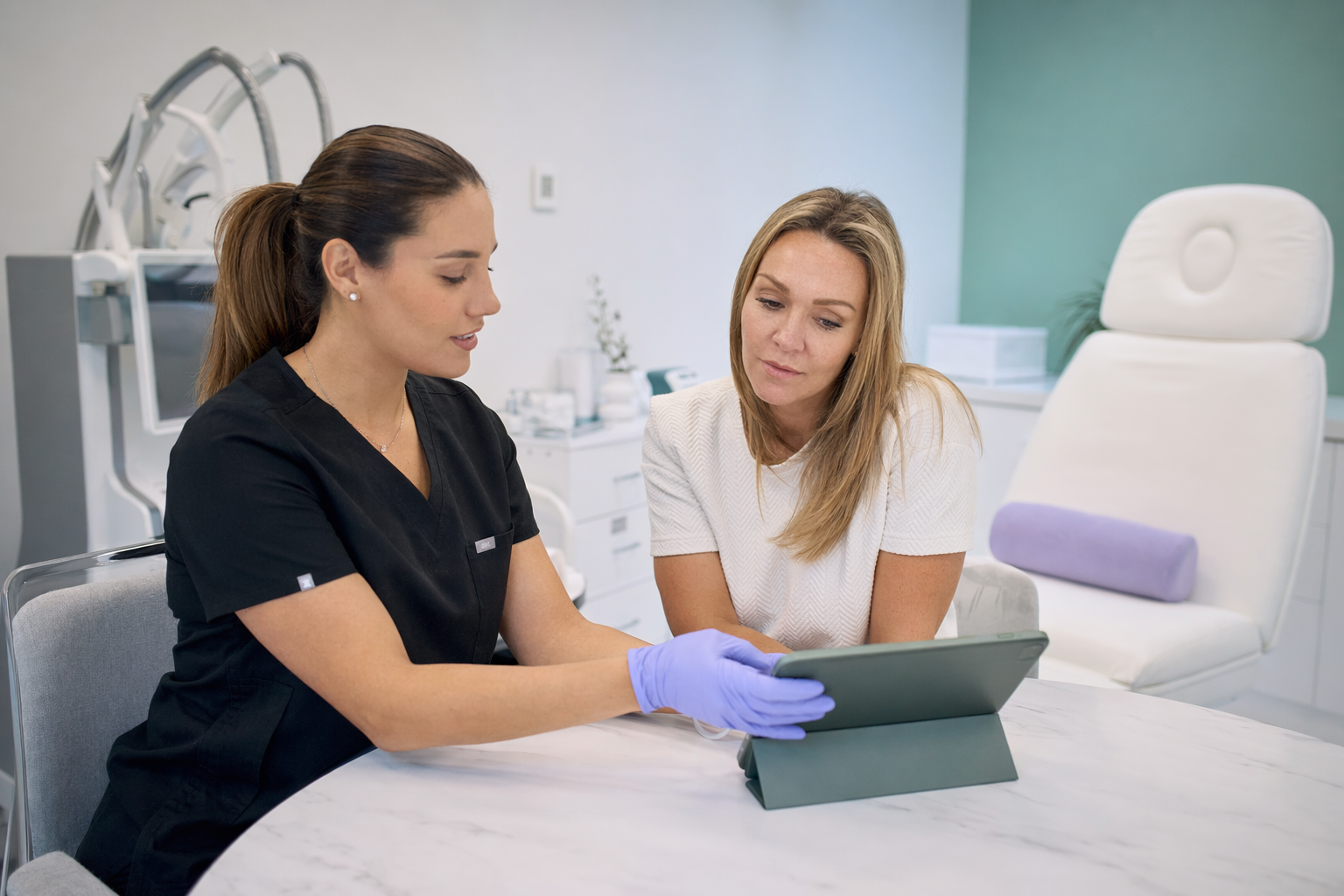
What each option is often good for
A med spa may appeal to people looking for cosmetic treatments in a more beauty-focused setting. Many offer common aesthetic services such as wrinkle relaxers, fillers, laser skin treatments, peels, and microneedling. If your goal is mainly appearance-related and you want to compare cosmetic options, a med spa may be one place to explore.
A dermatologist may be a stronger fit when cosmetic goals overlap with skin concerns that may need medical evaluation, such as persistent acne, unusual pigmentation, rosacea, scarring, or lesions you are unsure about. Dermatologists can assess whether something is cosmetic, medical, or both, and may offer treatment options within that bigger picture.
That does not mean one setting is always better. Some med spas are carefully supervised and highly focused on cosmetic care. Some dermatology offices have strong cosmetic offerings. The right setting depends on the treatment you are considering, your comfort level, and the qualifications of the actual provider.
Safety, supervision, and how to compare providers
When comparing a med spa with a dermatologist, safety questions matter more than marketing. Ask how consultations are handled, whether your provider explains risks and aftercare clearly, and what support is available if something does not go as expected.
Here are a few practical things to verify:
- The provider's current professional license.
- Their training in the exact treatment you want.
- The name and role of the supervising medical professional.
- Whether they explain realistic results, downtime, and possible side effects without pressure.
- Whether the facility feels clean, organized, and professional.
If you want help finding licensed aesthetic providers near you, you can use get matched. Lumena Glow does not provide medical or cosmetic advice, and matching is based only on your contact details and treatment interests, not your medical history.
Recovery and follow-up can be different
Recovery depends more on the treatment itself than on whether you go to a med spa or dermatologist. For example, injectables may have little downtime for some people, while some lasers or stronger peels may involve more redness, swelling, peeling, or time away from usual activities.
That said, the office's follow-up process matters. Ask what aftercare instructions you will receive, whether you will have a point of contact after treatment, and how concerns are handled during recovery. A good provider should explain normal short-term reactions, possible risks, and when to reach out.
Whether you choose a med spa or dermatologist, it is reasonable to expect clear communication before and after treatment. If recovery expectations are vague or minimized, that is a sign to slow down and ask more questions.
Cost differences and how to think about value
Prices can differ between med spas and dermatology offices, but there is no universal rule that one is always cheaper. Costs depend on the treatment, provider, product or device used, the amount used, your location, and the number of sessions recommended. Published prices and online ads are not quotes.
In broad US ranges, wrinkle relaxer treatments may run from about $10 to $20 per unit or use area-based pricing in some practices. Dermal fillers often range from about $600 to $1,500 or more per syringe. Chemical peels may range from about $150 to $800+ per session, microneedling from about $200 to $700+, and laser skin treatments from about $300 to $2,500+ per session depending on the type and treatment area.
A lower advertised price does not always mean better value, and a higher price does not automatically mean better care. Ask what is included in the consultation, who performs the procedure, whether follow-up is included, and how they set expectations. You can also review general costs and explore the treatments index before deciding what questions to bring to a consultation.
Always confirm a provider's license and training yourself, and ask who the supervising medical professional is.